
08/07/2026
Since last month, more details have been released regarding the mandatory electronic Documento de Control (DeCA). From October 5, only the electronic version will be accepted. Sound complicated? Don’t worry. Below, we explain simply what DeCA is, when you need it, and how to ensure you are fully compliant.
What is DeCA again?
DeCA stands for Documento electrónico de Control Administrativo. It is the digital version of the administrative control document (DCA) that must be present during transport in Spain.
The document serves as proof for inspection services that the transport is correctly registered and contains all essential information about the shipment, the client, and the carrier. From October 2026, this document may no longer be drawn up on paper; it must be available digitally.
When do you need a DeCA?
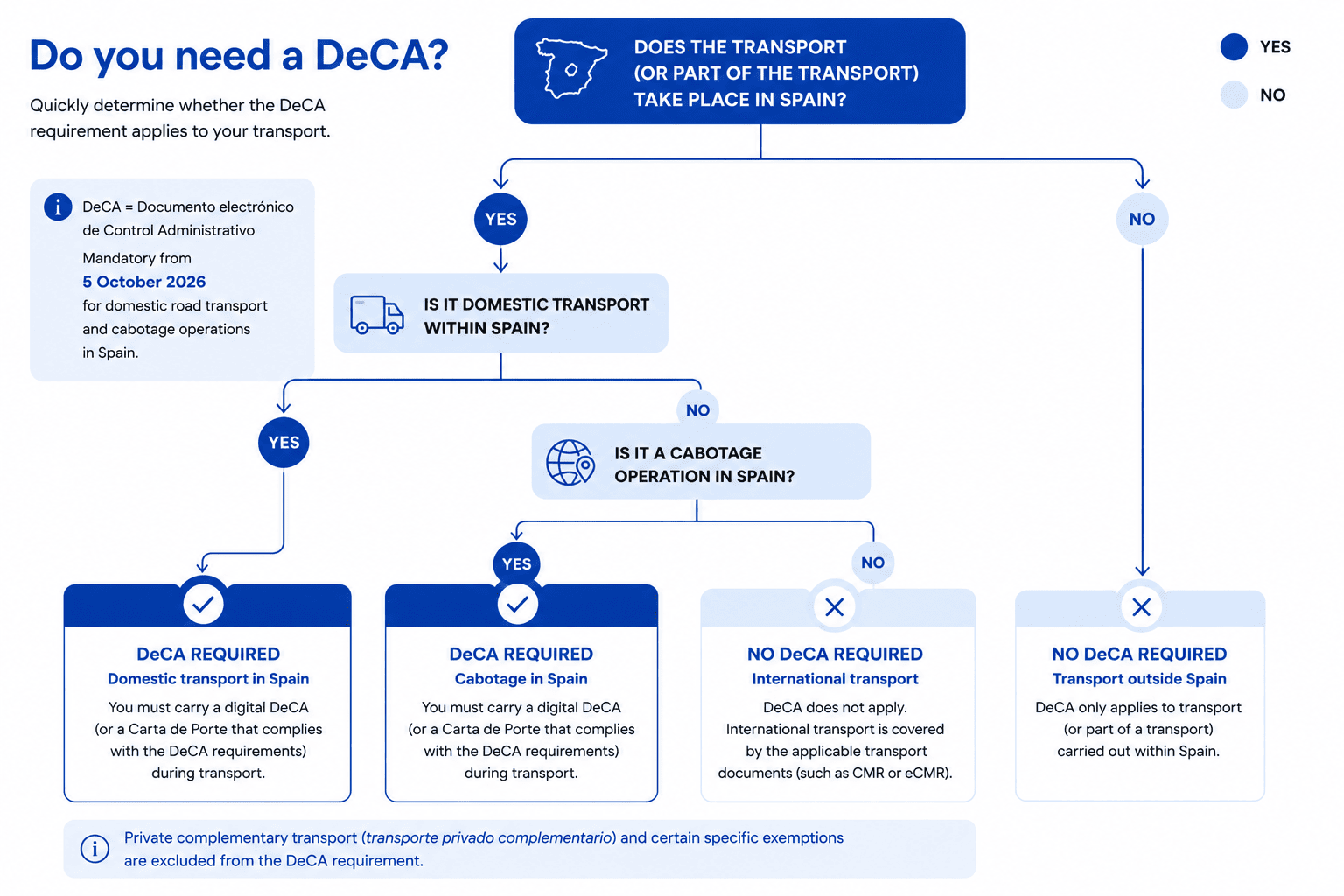
The obligation applies to:
- Domestic road transport in Spain
- Cabotage transport in Spain (transport by a foreign carrier within Spain)
DeCA is not mandatory for:
- some specific exceptions such as removal services or certain courier services;
- international transport;
- own-account transport (private complementary transport).
What must a DeCA contain?
A valid DeCA includes, among other things:
- client details;
- details of the actual carrier;
- loading and unloading location;
- nature and weight of the goods;
- transport date;
- vehicle registration plate(s);
- any remarks or reservations.
In addition, the document must meet several technical requirements. For example, it must be created digitally (not a scan), contain a QR code, and be immediately accessible to inspection services via a secure HTTPS link.
How does an on-road inspection work?
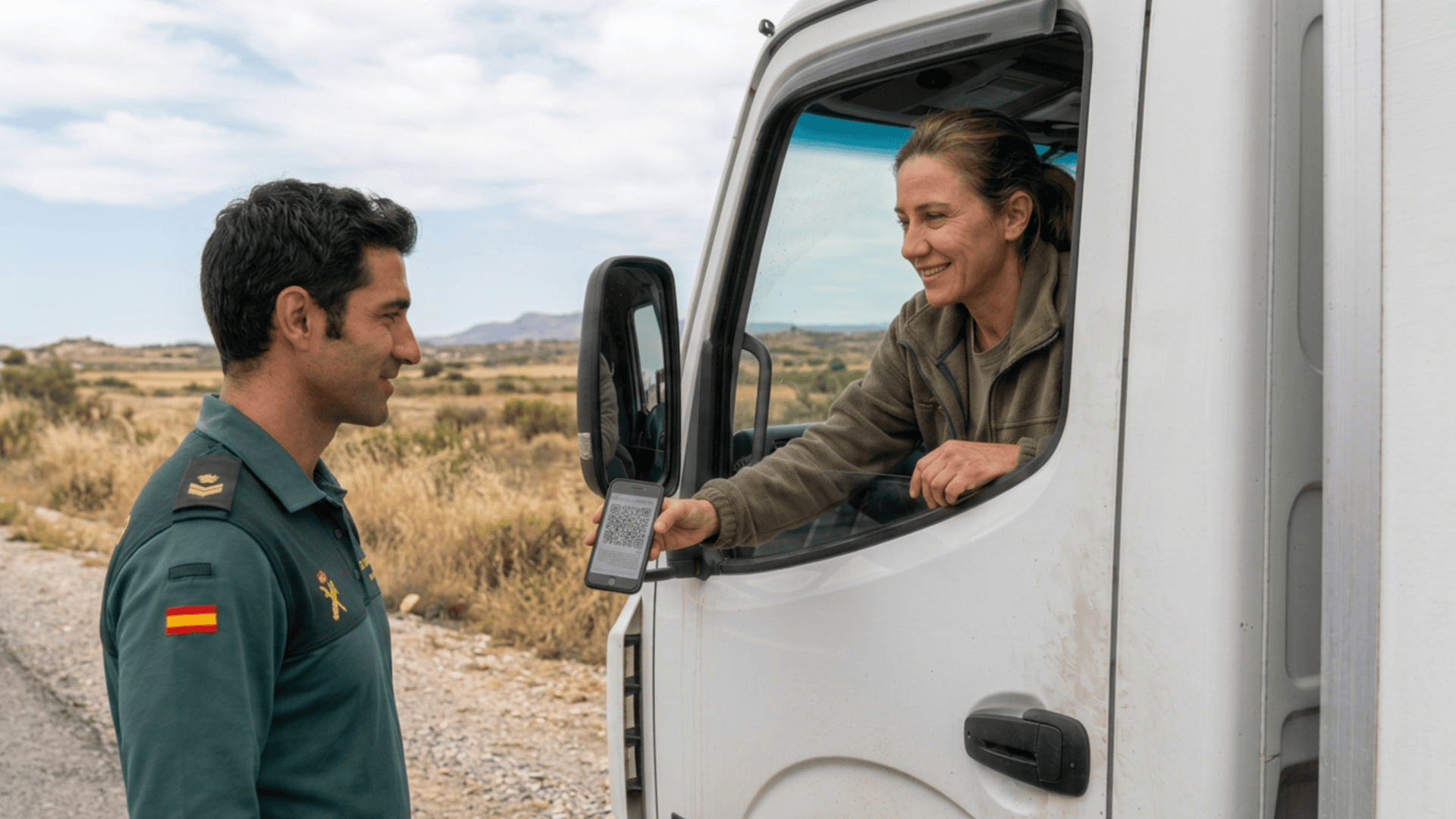
During a roadside check, the driver does not need to perform any complicated actions.
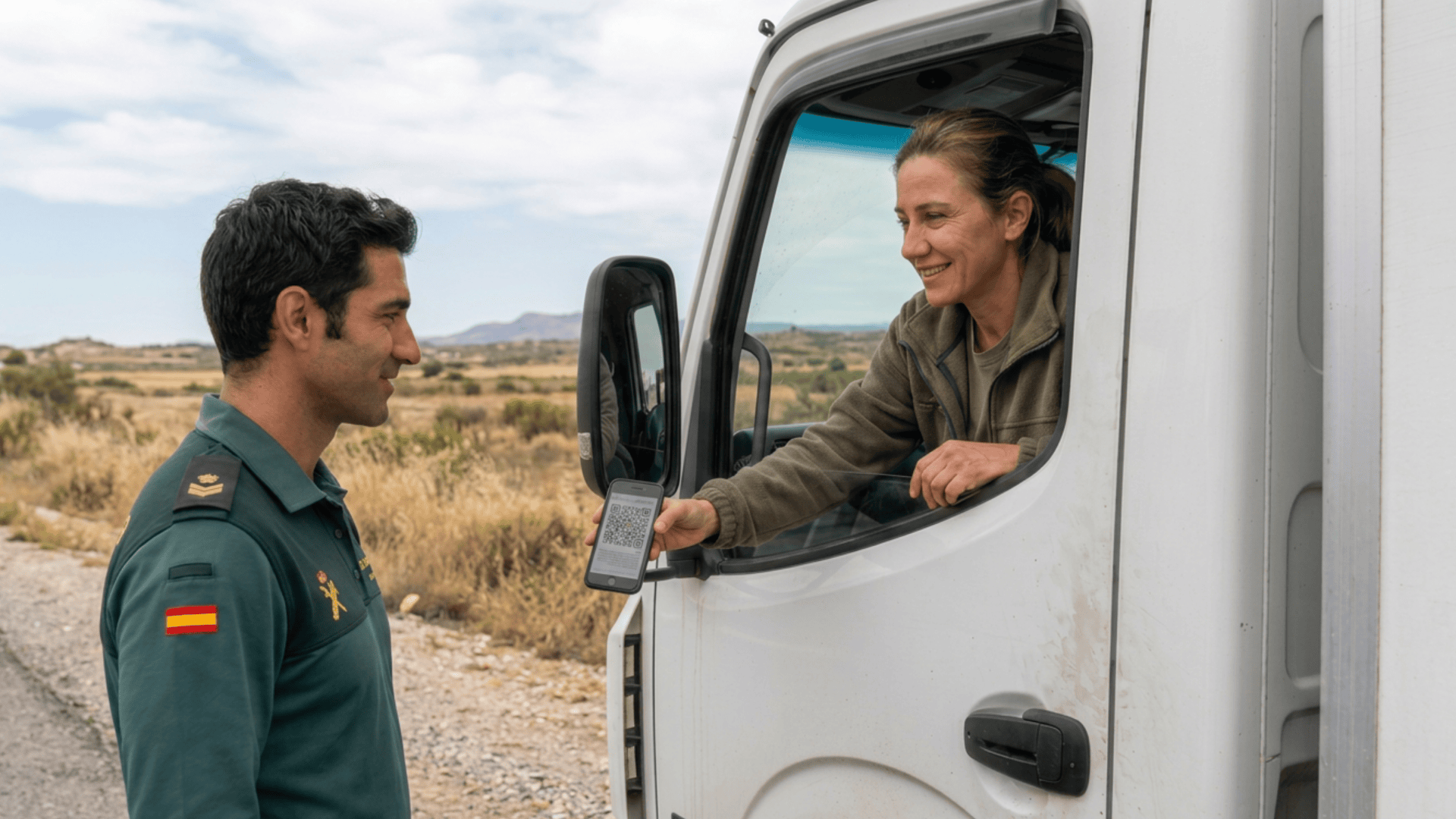
He simply presents the QR code on the document. The inspector scans this code and receives immediate access to the digital version of the DeCA.
Nothing needs to be uploaded to a government platform, and companies do not need to register anywhere in advance.
Is DeCA a separate document?
Not necessarily.
When a digital Carta de Porte or eCMR contains all legally required information and meets DeCA’s technical requirements, a single document can serve both purposes.
Who is responsible?
Responsibility lies with both the contractual client and the actual carrier.
Both parties must ensure that the document is available during transport. If the document is missing, both can be held liable.
What if something changes during transport?
If something changes along the way, such as a different vehicle or a changed destination?
Then this may not be manually adjusted on a printed version. The change must be made digitally:
- by officially amending the existing document, or
- by creating a completely new document.
The driver must then receive the updated version before the transport continues.
How does Pionira help?
At Pionira, you don’t have to worry about technical or legal requirements.
With our digital Documento de Control, you comply with DeCA requirements. This means, among other things:
- automatically a digital document (not a scan);
- a unique QR code on every document;
- secure online availability for inspection services;
- automatic storage of documents;
- no registration with a Spanish government portal;
- no extra actions for the driver during an inspection.
Ready for October 2026?
The introduction of DeCA represents another important step in the digitalization of freight transport in Europe. Those who already work digitally today have little to worry about. Are you still working with paper documents or are you unsure if your solution complies with the new Spanish regulations? Then this is the ideal time to review your processes.
With Pionira, you’re prepared for the new requirements and have a single solution for multiple transport documents (Carta de Porte, Documento de Control), so you can continue to carry out shipments in Spain with peace of mind. Are you crossing the Spanish border? Then you can continue with our e-CMR.
Further questions or interested in getting started?
